Embedding forms that convert on your site
Inline, popup, or full-page? How to embed forms where they'll get the most responses.
The FormSnapp Team
April 20, 2026 5 min read
Where and how you place a form is as important as the form itself. The same questions can convert two or three times better depending on the format and context — so the placement decision deserves as much thought as the wording. Here's how to choose.
Inline for intent
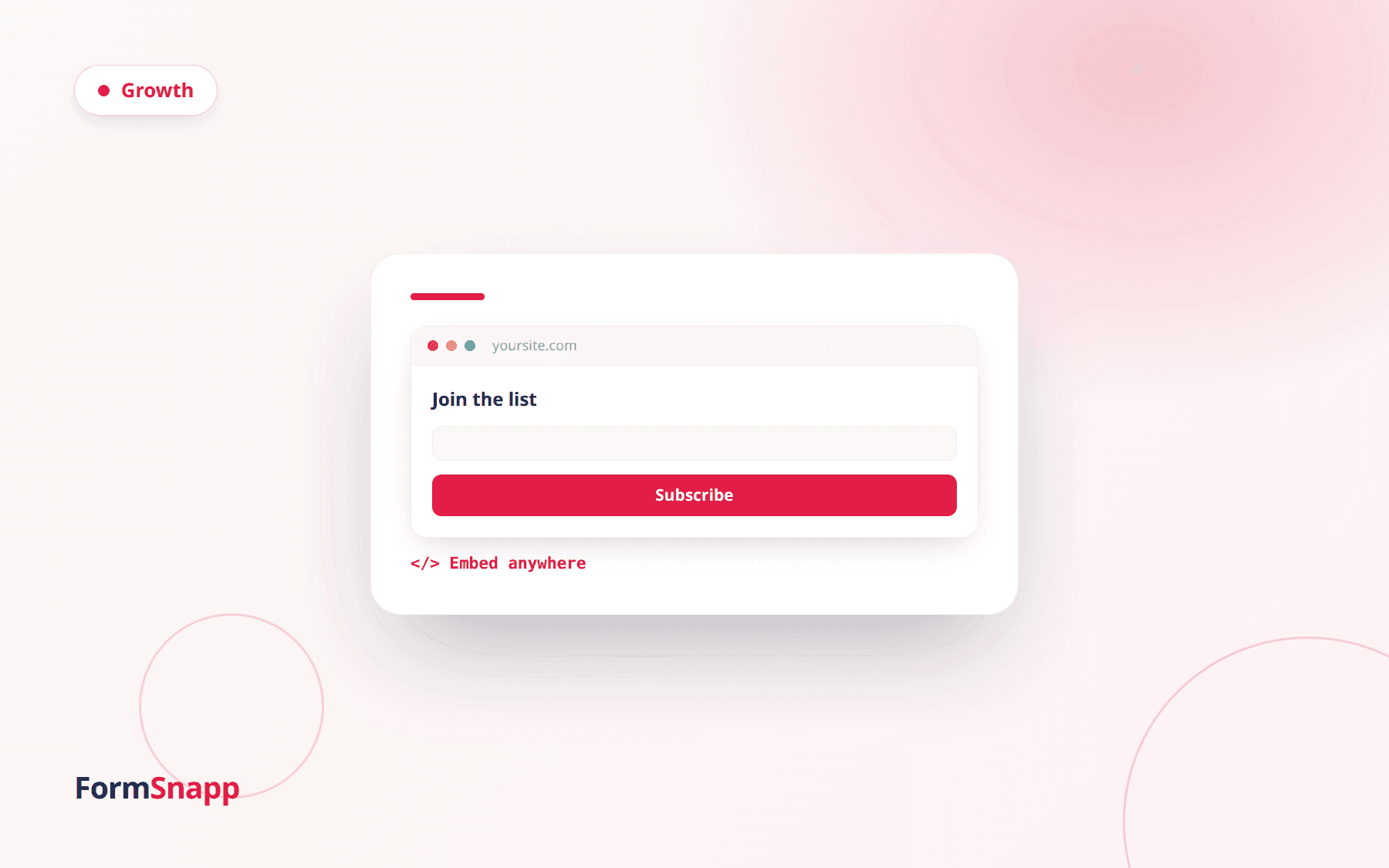
Embed a form directly in the page when the visitor is already engaged — at the end of a landing page, inside a relevant article, or beneath a pricing table. Inline forms feel like a natural next step rather than an interruption, and they convert best because the person is already in a decision-making frame of mind.
Popups for reach, used sparingly
Popups get attention, but timing is everything. Trigger on exit intent or after real engagement — never the instant someone arrives. A well-timed popup captures someone who was about to leave anyway; an immediate one just teaches visitors to reflexively close things on your site.
Full-page for focus
For anything longer or higher-stakes — an application, a detailed quote request, a survey — send people to a dedicated, distraction-free page. Removing your site's navigation and clutter keeps respondents focused on finishing, which matters more as the form gets longer.
Meet people where they are
Not every response comes through your website. FormSnapp gives every form a shareable public link, an inline embed snippet, and a QR code — so you can collect answers from an email, a social post, or a printed flyer at an event, all flowing into the same place.
- Use inline forms where intent is already high.
- Trigger popups on exit or engagement, never on arrival.
- Send long or high-stakes forms to a focused full page.
- Share by link and QR to reach people off your site.
The FormSnapp Team
We build FormSnapp — beautiful forms that people actually finish, with analytics that turn every response into a decision. We write about forms, surveys, and getting better data.