Writing questions that get honest answers
Question wording shapes your data. Here's how to ask in a way that gets the truth.
The FormSnapp Team
April 8, 2026 6 min read

The way you ask changes the answer you get. Small wording choices introduce bias, confusion, or social pressure — and quietly skew your data before it ever reaches your spreadsheet. A few principles keep answers honest and your conclusions sound.
Ask one thing at a time
"Was our team helpful and knowledgeable?" hides two questions in one. Respondents can only give a single answer, so you never learn which half they meant — maybe the team was friendly but unhelpful, and your data can't tell. Split double-barreled questions apart so each answer means one thing.
Stay neutral
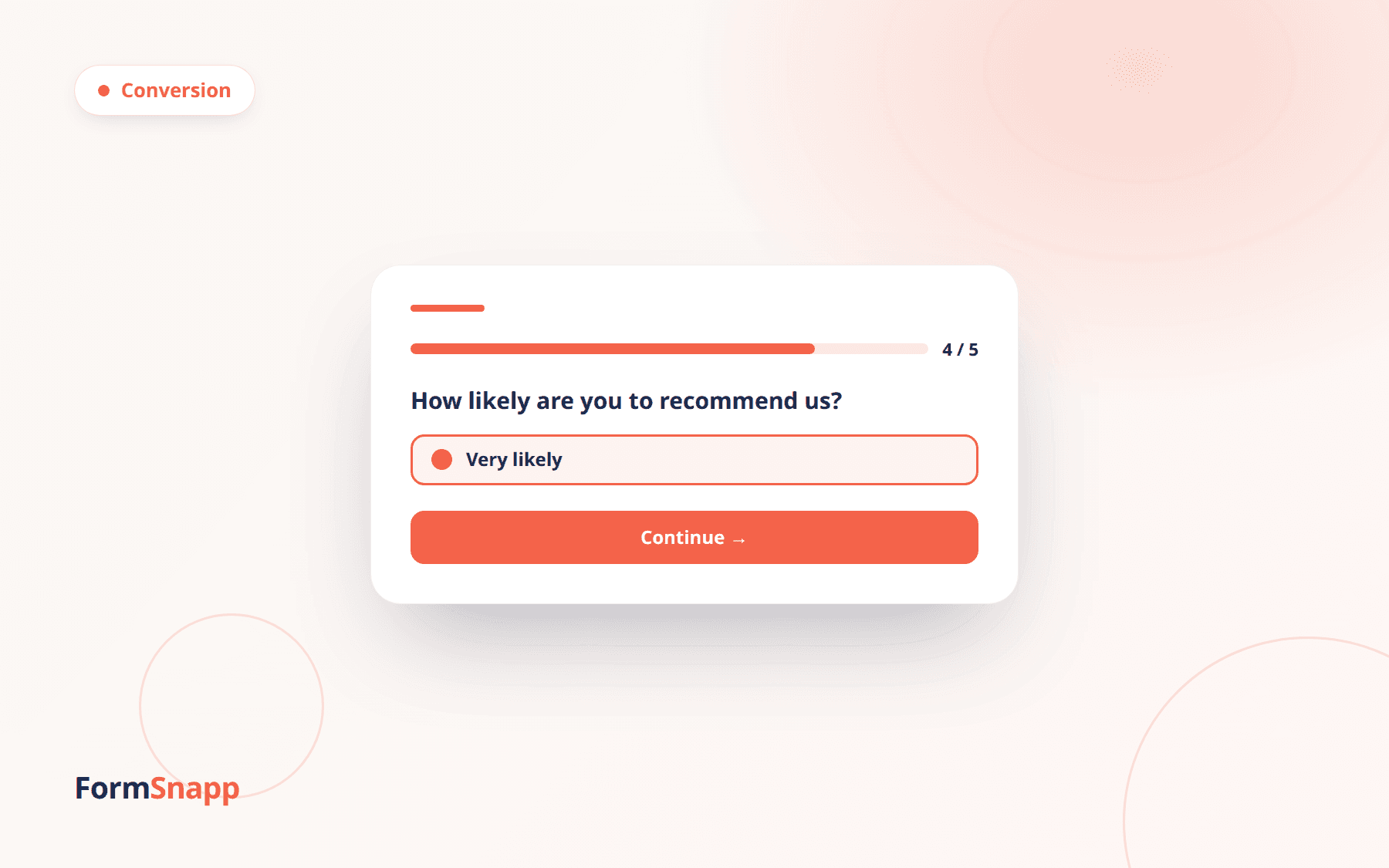
Leading questions like "How great was your experience?" nudge people toward a flattering answer. Neutral wording — "How would you describe your experience?" — gets you closer to the truth, even when it stings. If your questions assume a positive answer, your data will happily confirm your assumptions and teach you nothing.
Match the scale to the question
A rating scale is only useful if its points mean something. Label them clearly, keep the range consistent across your survey, and don't mix a 1–5 scale with a 1–10 scale in the same form. Ambiguous scales produce ambiguous data.
Make the effortful answer easy to give
Honest answers are sometimes critical ones, and people soften criticism to be polite. Reassure respondents that candid feedback is welcome, keep responses anonymous where you can, and give them room — an open text field at the end often surfaces your single most useful insight.
- Split double-barreled questions so each answer is unambiguous.
- Use neutral wording that doesn't presume an answer.
- Keep rating scales clear and consistent.
- Invite candor and leave room for open-ended honesty.
The FormSnapp Team
We build FormSnapp — beautiful forms that people actually finish, with analytics that turn every response into a decision. We write about forms, surveys, and getting better data.